

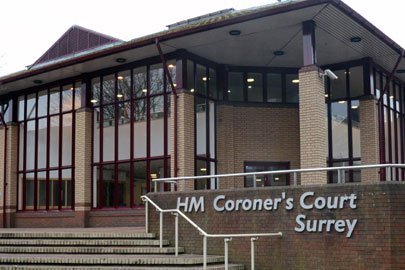

H.M. Coroner For Surrey

You are here

Skip to navigation
FAQs - Inquests into the deaths of Diana, Princess of Wales and Dodi Fayed

Does there have to be an inquest into the death of Diana Princess of Wales?

When will it be held?

Why? Why is it taking so long?

What will be the purpose of the inquest?

Will the inquest cover the deaths of both Diana, Princess of Wales and Dodi Al Fayed, or will they be treated separately?

Will there be a jury?

Are there different rules for members of the Royal Family?

Who may participate?

Who can be called to give evidence? Could this include Mr. Burrell....Mr. Al Fayed?

Can witnesses be compelled to attend or provide evidence?

Are there different rules when the death is abroad?

Can documents be used?

Where will the inquest be held?

Will the media have access?

Why does an inquest for the Princess of Wales come under the jurisdiction of Surrey CC?

How much will the inquest cost - £1 million has been bandied about by the media?

Why does the coroner hold meetings prior to the inquest?

What is the usual procedure of an inquest?

Can the Coroner order that a body be exhumed?


Q1. Does there have to be an inquest into the death of Diana Princess of Wales?

A1. Yes.   Under S.8 (1) of the Coroners Act 1988 ("that there is a body lying within his district and he has reason to suspect that the deceased has died a violent or unnatural death.") the coroner is required to hold an inquest whether the death occurred in his district or not.

Q2. When will it be held?

A2.   The Inquest on both Diana, Princess of Wales and Dodi al Fayed was opened on Tuesday 6th January 2004. No date has yet been set for continuing this inquest.

Q3.   Why?   Why is it taking so long?

A3.   Firstly and obviously, the Coroner needs to take account of the findings of the investigations and proceedings in France.   Some of these matters are still before the French courts.   The proceedings in France have been protracted because of the complexity of the case and issues raised as well as by subsequent appeals.

The Coroner has been unable to initiate the Inquest because the French authorities have not been able to allow the coroner in England to use any papers until the French proceedings have been completed.   (Within a very short time of the death, initial contact had been made with the relevant French authorities seeking access to the results of their inquiries and those contacts continue.)

The latest information received from France is that there are connected proceedings listed for 9 January 2004.   Even then, this may not necessarily conclude issues.

Secondly, when those papers are released to him, the coroner will then need to review them and consider whether any further investigations need to be undertaken on the Coroner's behalf before the inquest can be heard. We understand that the papers amount to more than 6, 000 pages, which will take some time to assimilate.

Thirdly, the coroner will also have to consider whether there is any other possible source of evidence or line of inquiry which may be relevant and needs to be addressed.

back to top

Q4 .What will be the purpose of the Inquest?


A4.   Coroners are independent judicial officers who work within a legal framework established by Act of Parliament.   A coroner's inquest is a long-established, tried and tested process for investigating the factual circumstances of a death. It is a limited fact-finding inquiry to establish the answers to:

The proceedings and evidence are aimed solely at ascertaining the answers to these questions.   Expressions of opinion on any other matter - for example, on who might be to blame - are not allowed.   However, the Coroner does have the power to investigate not just the main cause of death, but also "any acts or omissions which directly led to the cause of death".


Q5.   Will the Inquest cover the deaths of both Diana, Princess of Wales, and Dodi Al Fayed, or will they be treated separately?

A5.    This has still to be decided.   However, there will certainly be an inquest into each of the deaths, whether or not held together.


Q6.   Will there be a jury?

A6.   A coroner normally sits alone, although the law does require him to sit with a jury in a limited number of circumstances, e.g., deaths at the hands of the police, in custody etc.   Ultimately the coroner will decide this.

back to top


Q7. Are there different rules for members of the Royal Family?

A7. No, the same rules of procedure apply to all cases.


Q8. Who may participate?

A8. The rules of procedure set out those who are entitled to attend and be represented at an inquest. These include the parents, spouse and children of the person who died as well as others who may have an interest in the death (e.g., the executors, any person whose actions or omissions may have caused or contributed to the death and the police)

The coroner normally advises those with recognised interests of proposed inquest arrangements and, when possible, tries to take due account of any views expressed to him.   In these cases, he is in regular touch with family members or representatives.

Q9.   Who can be called to give evidence? Could this include Mr. Burrell...Mr. Al Fayed?

A9.   The coroner is solely responsible for identifying the witnesses to be heard.   He will try to include those people who can provide material and relevant evidence to help him to establish the facts he requires.   Until the Coroner is in a position to initiate the inquest, he is not able to decide who to call to give evidence.

back to top

Q10.   Can witnesses be compelled to attend or provide evidence?

A10.   Yes, if they are in England and Wales and formally summoned.   Failure to attend may result in a fine and, in the case of repeated failure to do so, possible imprisonment.   All evidence is given under oath.
If witnesses are abroad it is doubtful that they can be compelled to attend.

Q11. Are there different rules when the death is abroad?

Q11 No, the inquest process makes no distinction between those cases where the death is in England or Wales and when it occurred abroad and there may be practical difficulties, as in this case, in obtaining the evidence from witnesses if they are abroad.

Inevitably, the coroner has to rely on any investigation carried out by the foreign police or judicial process, supplemented by any evidence obtainable from witnesses who may be available in England and Wales.

This does take time and even in simple cases, the delay can be expected

to be years rather than months.

Q12.   Can documents be used?

A12. The rules of procedure do enable the coroner to accept evidence in the form of documents if, for example, they are unlikely to be disputed.

back to top

Q13.   Where will the Inquest be held?

A13.   The Inquest into the death of Diana, Princess of Wales was opened at the Queen Elizabeth II Conference Centre, London, SW1 at 10:30 AM on Tuesday 6th January 2004. The Inquest into the death of Dodi al Fayed was opened at Wray Park, Reigate, Surrey at 3:00 PM the same day. No date has yet been set for continuing this inquest.


Q14.   Will the media have access?

A14.   Yes.   The rules of procedure require that inquests be held in public and arrangements will be made to enable the media to report the case fully.


Q15. Why does an Inquest for the Princess of Wales come under the jurisdiction of Surrey CC?

A15.   It doesn't.   The inquest into the death of Diana, Princess of Wales is under the jurisdiction of the Coroner of The Queen's Household.   The present holder of that office is Michael Burgess who is also Coroner for Surrey.   It is as Coroner for Surrey that he also has jurisdiction in the case of the late Dodi Al Fayed whose body was brought to Surrey and buried on 31 st August 1997.

back to top


Q16.   How much will the Inquest cost - £1 million has been bandied about by the media?

A16.   Until the scope of the Inquest and the venue and necessary arrangements have been decided, it is not possible to say.   The Surrey County Council is required by Act of Parliament to pay the costs and expenses of the Surrey Coroner. Similarly, the costs and expenses of the Coroner of The Queen's Household fall to be paid by that household.

No figure has been set aside and the figure of £1 million is entirely speculative.   The key point is that the Coroner has a duty in law to carry out and it will be the steps he needs to take to achieve this that will determine the costs - not the other way round.


Q17. Why does the coroner hold meetings prior to the inquest?

A17. The Coroner is expected to be a "pro-active" and, as such, has to make arrangements, give directions and assess the progress pf pre-inquest inquiries with many different people concerned and involved in cases.   Meetings with those who may be involved in some capacity or other is a quite usual way for matters to be addressed and there is nothing exceptional or unusual in such meetings taking place.   The inquest hearings, though, will be held in public.

back to top


Q18. What is the usual procedure of an inquest?

A18. There is no rigid structure required for running inquests. However, the case will be announced and usually the coroner may then explain the process and purpose of the hearing, identifying the witnesses to be called and any evidence which he proposes should be in the form of documents (without the document author attending in person).

The witnesses will then be invited to the witness box in turn and asked questions by the coroner (and then by those who have recognised interests) concerning those matters which are within their knowledge or experience.

The inquest will normally consider medical evidence (e.g., post-mortem reports, and possibly the reports from other doctors who treated the deceased) as well as reports and statements from those who attended as investigators (e.g., the police).

At the end of the evidence, the coroner will sum up the evidence. If there is a jury, then the jury will be given directions for reaching their conclusion of verdict. If there is no jury, the coroner will announce his findings and conclusions.

There are no speeches allowed.

Q19. Can the Coroner order that a body be exhumed?

A19. The coroner does have authority to order that a body be exhumed is he believes that this is necessary in order to hold an inquest on that body or that there is some serious criminal allegation requiring access to the body.

back to top


Primary Navigation - link to the general sections from here
